The gym is a place of constant motion, a symphony of clanging weights and rhythmic breathing. Yet, amidst the chaos, there exists a peculiar stillness—a moment of quiet defiance against the rush. This is the domain of the wall sit, an unassuming exercise that has found new life in the unlikeliest of places: the queue for the squat rack.
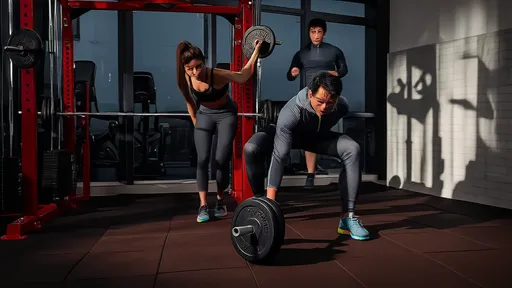
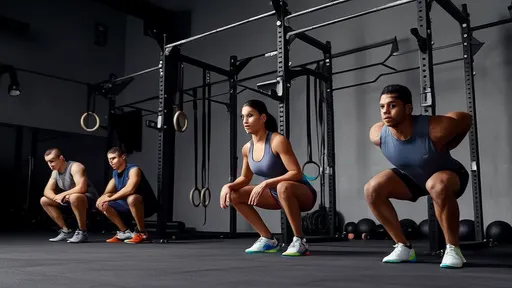
As any seasoned lifter knows, the squat rack is hallowed ground. It’s where PRs are chased, where form is perfected, and where egos are occasionally checked. But it’s also a bottleneck, especially during peak hours. Waiting for your turn can feel like an eternity, especially when the person ahead of you is meticulously setting up for a 20-rep widowmaker set. Enter the wall sit—a deceptively simple isometric hold that transforms idle time into productive training.
The wall sit is no stranger to fitness routines, often relegated to the realm of warm-ups or finishers. But in the context of the squat rack queue, it takes on a new purpose. It’s not just about killing time; it’s about priming the body for the work ahead. The quadriceps, hamstrings, and glutes are engaged in a low-intensity burn, a gentle reminder of the heavier load to come. The core tightens, the breath steadies, and the mind sharpens. By the time you step up to the bar, you’re not just warmed up—you’re dialed in.
What makes this adaptation particularly clever is its versatility. The standard wall sit—back flat against the wall, thighs parallel to the floor—is just the beginning. Lifters have begun experimenting with variations to target different muscle groups or add an extra challenge. Some elevate their heels to shift focus to the quads. Others press a lightweight plate against their chest to engage the upper body. The most daring might even hold a goblet squat position, turning the static hold into a dynamic prep for the squat itself.
The beauty of the wall sit queue is its unobtrusiveness. Unlike lunges or air squats, which can take up valuable space and draw curious stares, the wall sit is compact and discreet. It doesn’t require equipment, and it won’t leave you sweaty or breathless before your main lift. It’s a subtle way to stay active without disrupting the gym’s flow—a nod to the unspoken etiquette of shared workout spaces.
Of course, not everyone is a convert. Some argue that the wall sit, even in its modified forms, is too passive to be truly effective. They’d rather use the wait time for mobility drills or dynamic stretches. But proponents counter that the wall sit’s simplicity is its strength. It requires no thought, no setup, and no recovery. It’s a way to stay engaged without overcomplicating the process.
There’s also a psychological component at play. The squat rack queue is a test of patience, and the wall sit—a test of endurance—mirrors that challenge. Holding the position becomes a mental game, a way to practice discipline before the main event. It’s a small victory, a way to assert control over the waiting game that defines so much of gym life.
As gym culture continues to evolve, so too do the creative ways lifters make the most of their time. The wall sit queue is a testament to that ingenuity. It’s a reminder that progress isn’t just about the big lifts or the heavy weights—it’s about the small, consistent efforts that add up over time. So the next time you find yourself waiting for the squat rack, consider sliding into a wall sit. Your legs—and your patience—might just thank you.

By /Aug 14, 2025

By /Aug 14, 2025

By /Aug 14, 2025
By /Aug 14, 2025

By /Aug 14, 2025

By /Aug 14, 2025
By /Aug 14, 2025

By /Aug 14, 2025

By /Aug 14, 2025
By /Aug 14, 2025

By /Aug 14, 2025
By /Aug 14, 2025
By /Aug 14, 2025
By /Aug 14, 2025

By /Aug 14, 2025

By /Aug 14, 2025
By /Aug 14, 2025

By /Aug 14, 2025
By /Aug 14, 2025

By /Aug 14, 2025
