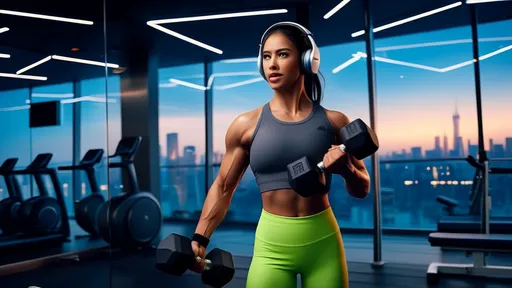
The rhythmic thump of basslines and the pulse of high-energy beats have long been the lifeblood of gym culture. Yet walk into any fitness center, and you’ll likely encounter a sonic divide—some playlists feel like they were curated by an algorithm with no soul, while others strike an almost spiritual chord with exercisers. The right music can transform a grueling workout into an exhilarating experience, but the wrong selection can drain motivation faster than a missed pre-workout coffee. This isn’t just about volume or tempo; it’s about understanding the unspoken relationship between movement and melody.
The Science Behind the Soundtrack
Research has repeatedly shown that music doesn’t just accompany physical activity—it enhances it. A study published in the Journal of Sports Sciences found that synchronizing movement to music can increase stamina by up to 15%. The phenomenon, known as "entrainment," explains why runners naturally match their stride to a song’s BPM. But beyond tempo, the emotional resonance of music triggers dopamine release, effectively turning a deadlift into a euphoric experience. Gym owners who treat their playlists as afterthoughts are ignoring a powerful psychological tool.
Yet the commercial gym model often defaults to safe, soulless choices—think repetitive EDM drops or classic rock staples played at ear-splitting volumes. The irony? Members frequently cite poor music as a top reason for canceling subscriptions. A 2022 survey by Fitness Business Insider revealed that 68% of gym-goers would switch facilities for better-curated soundtracks. This isn’t merely about taste; it’s about creating an environment where pain transforms into pleasure through sonic alchemy.
Breaking the Beige Music Barrier
Forward-thinking trainers are now approaching playlists with the same precision as workout programming. At a boutique studio in Brooklyn, coaches analyze class demographics to build genre-spanning sets—a hip-hop heavy HIIT session might transition into Afrobeats during recovery intervals, while a yoga flow class incorporates Tibetan singing bowls. "Music should mirror the arc of the workout," explains head trainer Javier Mendez. "The warm-up needs a different energy than the final burnout set."
Technology is enabling smarter curation. Streaming platforms now offer BPM-based filters, allowing trainers to match songs to target heart rates. Some studios even use biometric feedback to adjust playlists in real-time—when the room’s energy dips, the system automatically queues anthemic tracks. Yet the human element remains crucial. Playlist architects like LA-based DJ Fit describe their craft as "emotional timecoding," weaving together songs that create narrative momentum throughout a session.
The Underground Revival
An unexpected trend is emerging from the weight racks: a grassroots rebellion against generic gym music. Powerlifters are sharing Spotify playlists heavy with 90s rap acapellas and industrial metal, while cycling communities trade obscure disco edits that maintain perfect cadence. Social media hashtags like #GymBangers showcase this democratization—where a Bulgarian folk remix might inspire just as many PRs as a Megan Thee Stallion track.
This movement reveals an essential truth: great workout music isn’t about following trends, but about sparking visceral reactions. The chest-thumping intensity of a drum & bass drop might propel one lifter through their final rep, while another thrives on the hypnotic repetition of minimal techno. As fitness becomes increasingly personalized, so too must its soundtrack.
The savviest gym owners are taking note. Rather than imposing a single musical identity, they’re creating zone-based soundscapes—perhaps heavy metal near the squat racks and tropical house by the treadmills. Others implement "member’s choice" hours or invite local DJs to spin live sessions. These approaches acknowledge what science confirms: when music feels personally resonant, people push harder, stay longer, and return more frequently.
The Future Sounds Like This
As wearable tech evolves, we’re approaching an era of truly adaptive workout music. Imagine earbuds that detect your running gait and adjust song BPM accordingly, or smart mirrors that cursetlists based on facial expression analysis. Startups are already experimenting with AI that generates custom tracks matching individual exertion levels—a sort of sonic personal trainer.
Yet for all these advancements, the fundamentals remain unchanged. The perfect gym playlist balances familiarity with surprise, mirrors physical intensity, and most importantly—makes sweat feel like celebration rather than suffering. In an industry obsessed with metrics, perhaps the most undervalued KPI is how often members unconsciously mouth the words to a song between sets. That’s when you know the music isn’t just playing in the background; it’s fueling the fire.

By /Aug 14, 2025

By /Aug 14, 2025
By /Aug 14, 2025

By /Aug 14, 2025

By /Aug 14, 2025

By /Aug 14, 2025

By /Aug 14, 2025
By /Aug 14, 2025

By /Aug 14, 2025

By /Aug 14, 2025

By /Aug 14, 2025

By /Aug 14, 2025

By /Aug 14, 2025

By /Aug 14, 2025

By /Aug 14, 2025

By /Aug 14, 2025
By /Aug 14, 2025

By /Aug 14, 2025

By /Aug 14, 2025

By /Aug 14, 2025
